

The following transcript has been edited for clarity.
Diana V. Do, MD: Hi, I’m joined by Michael A. Singer, MD, who is presenting some very exciting data on a tyrosine kinase inhibitor (TKI) that’s given subcutaneously. What is its effect on retinal vascular diseases?
Michael A. Singer, MD: So this is called migaldendranib (Ashvattha Therapeutics) and basically what it does, it affects all forms of VEGF just like a TKI, but it’s not a TKI. [Editor’s note: Migaldendranib is a hydroxyl dendrimer covalently linked to a VEGF receptor TKI; Figure 1.] It also [regulates] IL-6 and other inflammatory mediators.
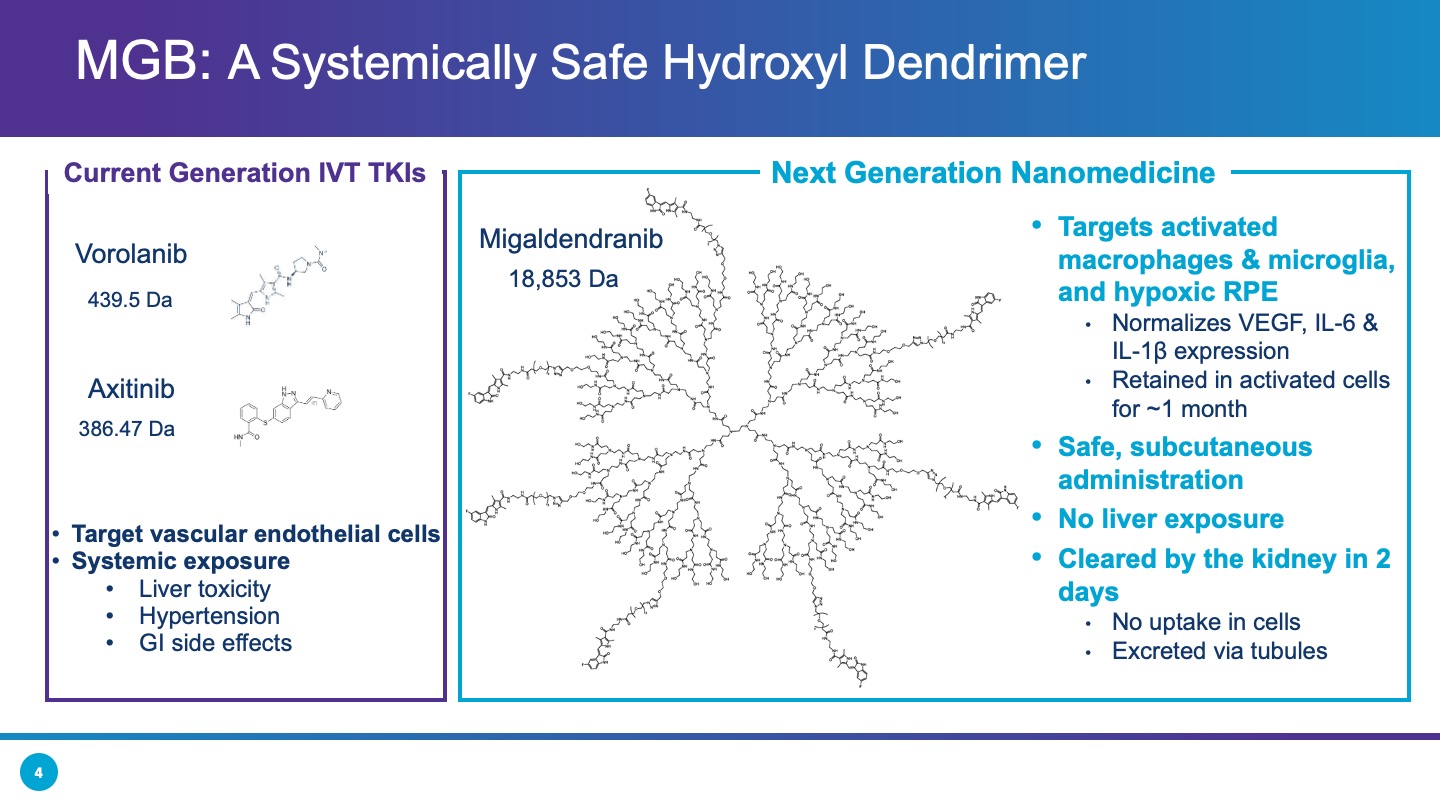
Figure 1. Migaldendranib is a hydroxyl dendrimer covalently linked to a VEGF receptor tyrosine kinase inhibitor. The agent is administered as a single monthly subcutaneous injection, and treats both eyes simultaneously.
[Ashvattha] ran a phase 2a study looking at patients who were previously treated with diabetic macular edema (DME) and age-related macular degeneration (AMD). They gave them a loading shot of aflibercept 2 mg (Eylea; Regeneron), and because it’s actively inflamed cells, they wanted people to get dry and then re-swell up within the first 12 weeks and use that as their baseline. What they showed was that giving people shots either every 2 or every 4 weeks, they were able to essentially show improvement in vision in DME and AMD somewhere between 5 and 6 letters, depending on [the disease], and decrease the treatment burden by 80%+ (Figure 2). [Migaldendranib also] affects the fellow eye and stabilizes it, [and] they decreased [fellow eye treatment burden] by almost 90% as well. There were very few safety concerns, and although it’s systemically absorbed, there were no kidney issues.
So because they did so well, they're going to run a phase 2b trial looking at DME, because in the original study, none of the patients who were treated for DME had any progression of their diabetic retinopathy, for those who were NPDR, to vision-threatening complications. So they’re actively going to start that within the next calendar year and I can’t wait to be part of that process.
Diana V. Do, MD: Well, thank you so much for this cutting edge information and we look forward to hearing more in the future. RP
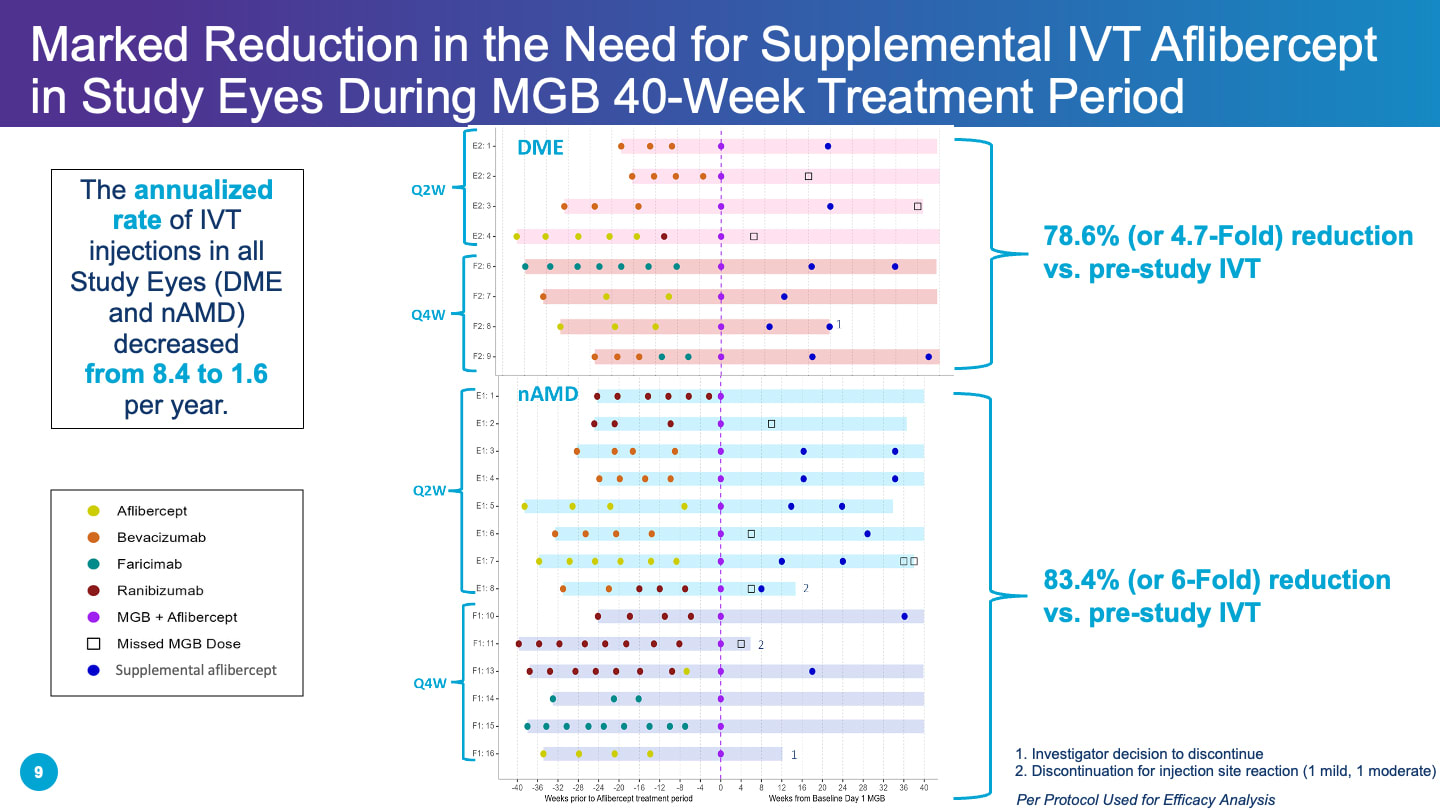
Figure 2. In all study eyes (diabetic macular edema and neovascular age-related macular degeneration), the annualized rate of intravitreal injections decreased from 8.4 to 1.6 per year. Injection burden was reduced by 78.6% in DME and by 83.4% in nAMD compared with pre-study treatment.