



At a time when federal research funding is under close scrutiny, leaders at the National Eye Institute (NEI) are emphasizing continuity, opportunity, and the outsized role of vision science within the broader research ecosystem. Speaking to a packed audience at the Association for Research in Vision and Ophthalmology (ARVO) meeting in Denver, NEI Director Michael F. Chiang, MD, framed recent policy and budget shifts as an evolution in how research is supported.
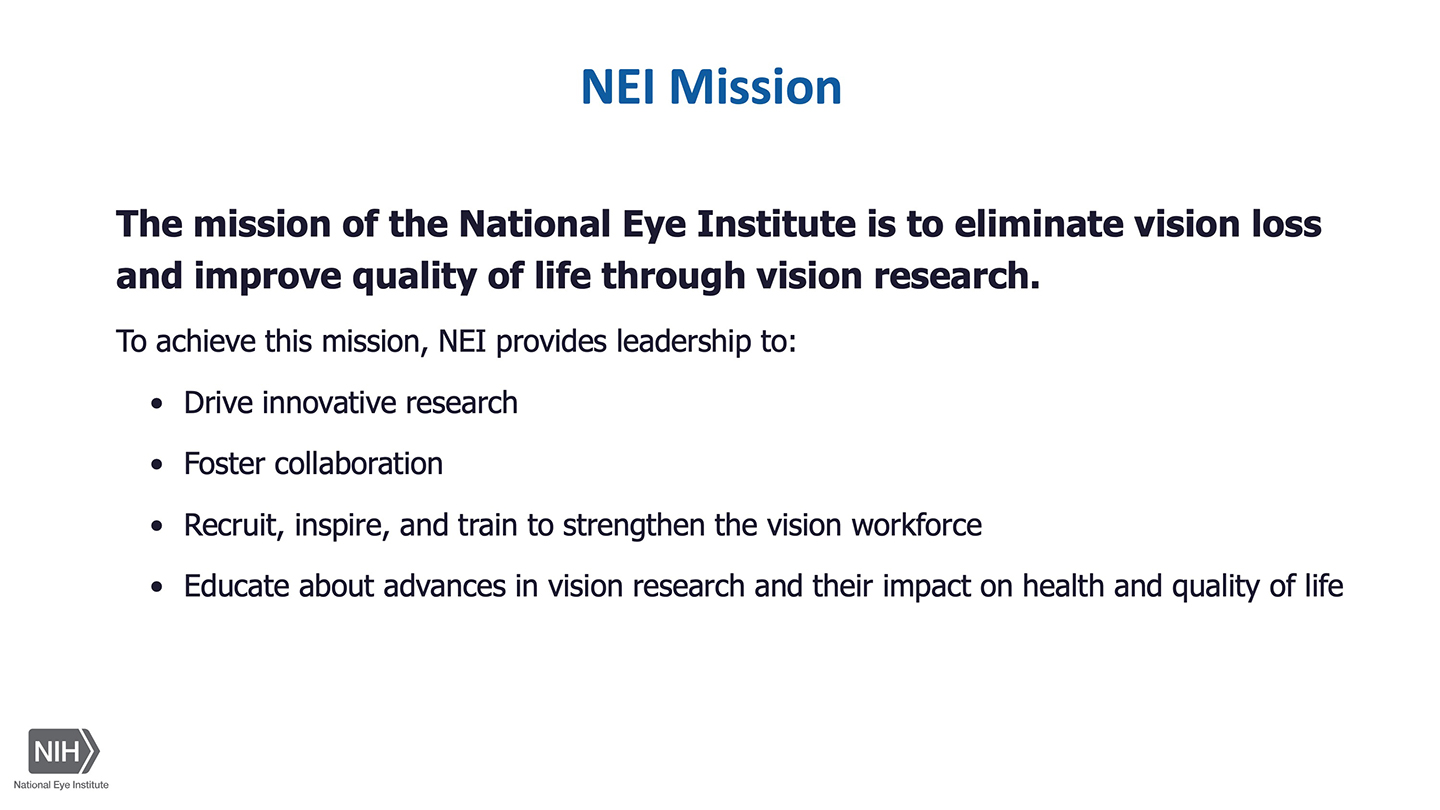
Dr. Chiang, who was recently renewed for a second 5-year term as NEI director, highlighted both the stability of the institute’s funding and the influence of ophthalmic research across medicine. “Our budget is $896 million. It’s been flat for the past 2 years,” he said, noting that the NEI’s funding represents about 1.9% of the overall budget of the National Institutes of Health (NIH). Despite this, he emphasized ophthalmology’s impact: “Almost every major advance in eye care over the past several decades has directly or indirectly resulted from NEI-funded work.”
Even amid federal funding uncertainty, including the threat of government shutdowns, NEI has prioritized consistency for investigators. Dr. Chiang pointed to the efforts of program officers and grants management staff in 2025, who ensured that funds were distributed on schedule to minimize disruption to ongoing research. “They got every single dollar of our budget out the door by the end of the year,” he said. “They had to really sweat to do that.”
Several policy changes are shaping how funding is delivered, including expanded use of multiyear funding. Under this model, the full value of certain grants is committed upfront, providing investigators with greater predictability. While this approach requires careful budgeting, Dr. Chiang described it as part of a strategy to reduce uncertainty tied to annual appropriations. “The idea is to shield researchers from the uncertainty of federal appropriation year by year,” he said.
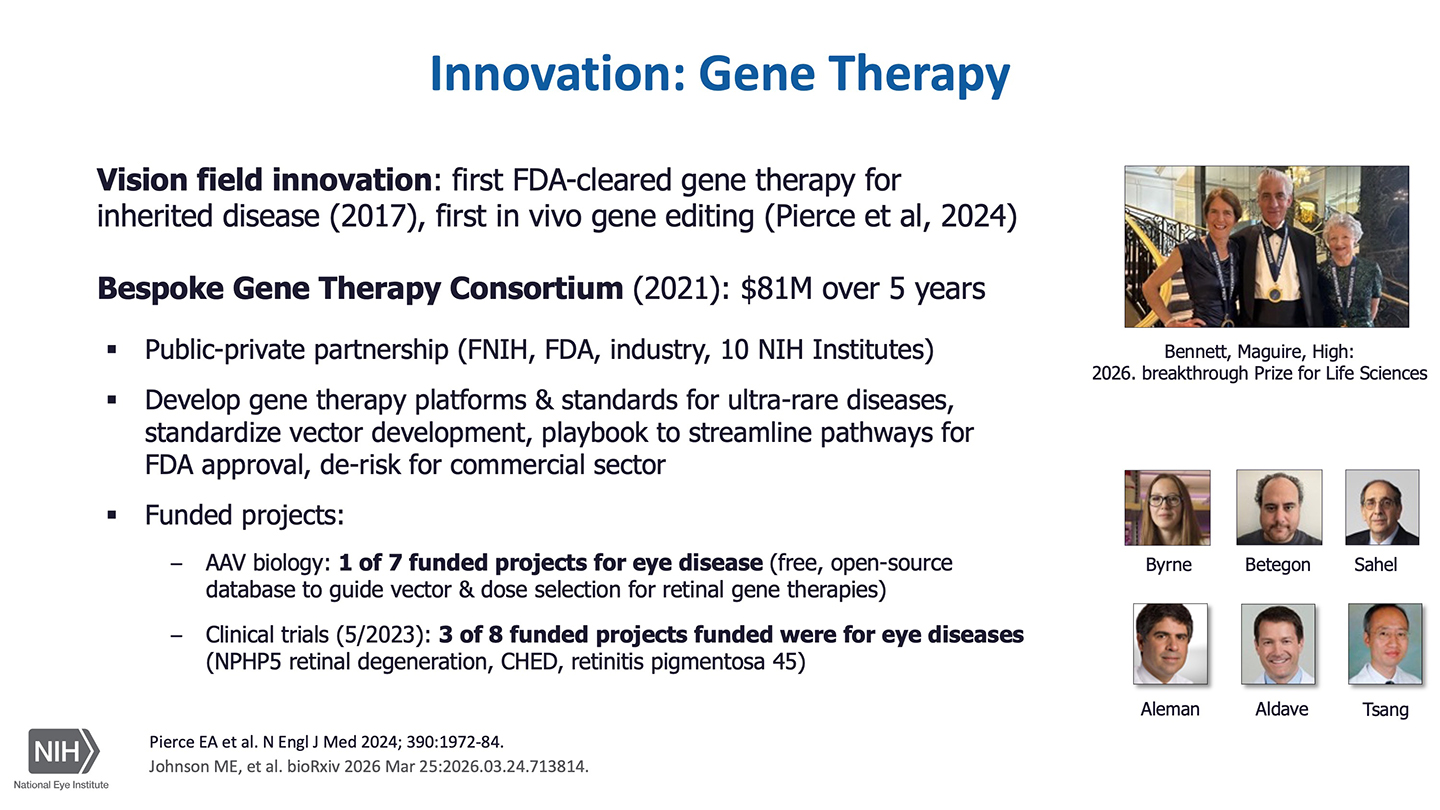
According to Dr. Chiang, an example of a successful partnership is the Bespoke Gene Therapy Consortium, an $81 million public-private initiative to develop standardized platforms and regulatory pathways for ultra-rare diseases.
At the same time, NEI continues to emphasize investigator-initiated research. Efforts across NIH to streamline funding announcements are intended to reduce complexity and encourage researchers to pursue original ideas rather than narrowly defined topics. “The overall purpose is to empower more investigator-driven projects,” Dr. Chiang said, noting that NEI already relies heavily on this model.
Changes in funding evaluation are also underway. While some NIH institutes have historically used formal pay lines, NEI has not, and that approach will continue. Instead, there is increasing emphasis on how well proposals align with institute and NIH-wide priorities. “We are going to be looking more than before at alignment with overall NEI and NIH priorities,” Dr. Chiang said, encouraging investigators to engage early with program staff.
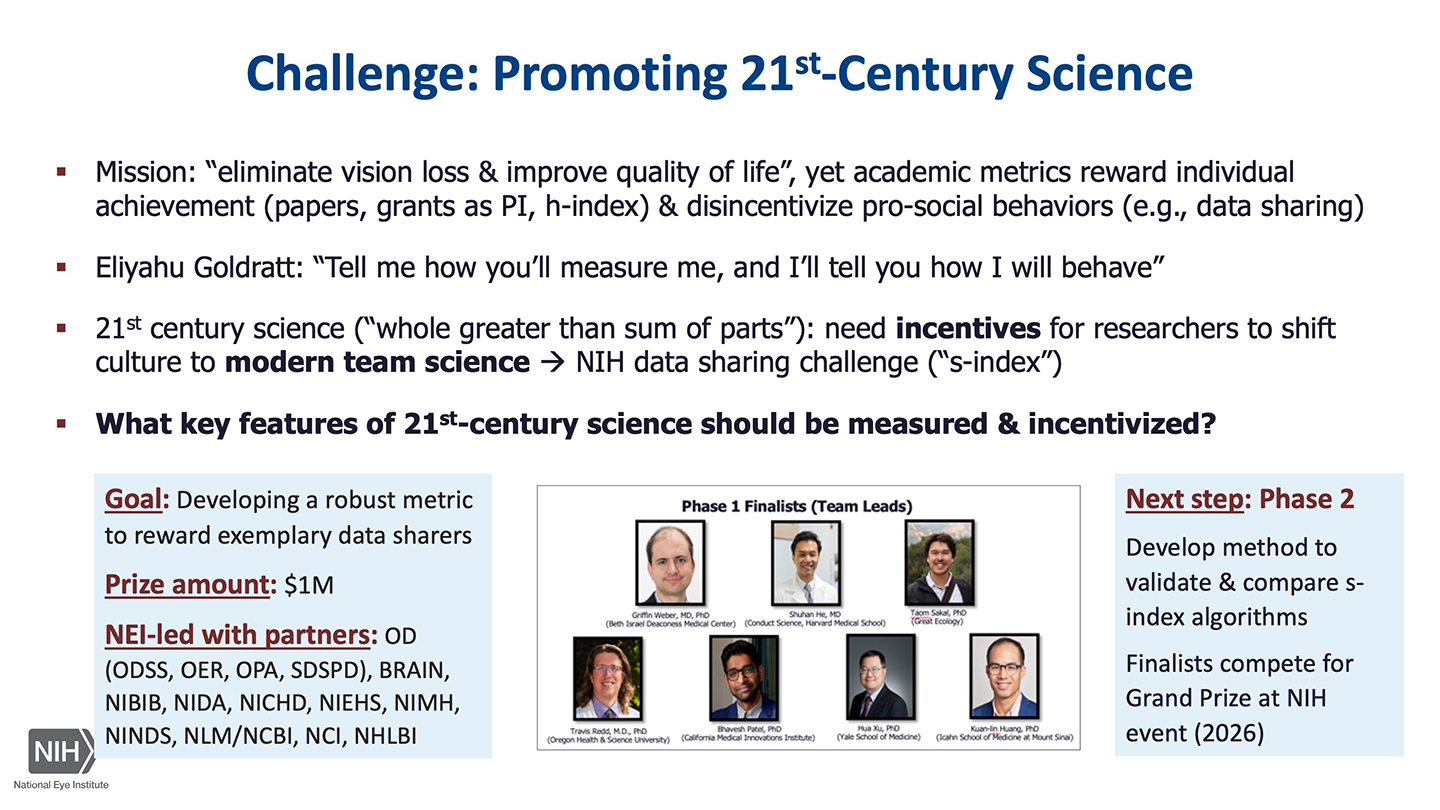
"We’ve become very interested in what we can do at NIH to help promote 21st-century science, where the whole is greater than the sum of its parts," commented Dr. Chiang. "My view is that we need incentives that reward collaboration and help shift the culture toward modern team science." To this end, the NIH developed the Data Sharing Challenge, a $1 million competition designed to create new measures that incentivize collaborative, data-driven research.
Looking ahead, new opportunities are emerging through NIH-wide initiatives that extend beyond NEI’s base budget. Programs focused on artificial intelligence, large-scale data infrastructure, and precision medicine are expected to support vision research alongside other fields. Dr. Chiang pointed to efforts such as Bridge2AI and the forthcoming PRIMED-AI initiative as examples of how ophthalmology can contribute to—and benefit from—cross-disciplinary science.
Throughout the presentation, he returned to a central theme: the unique position of vision research as a driver of broader innovation. From gene therapy to imaging and artificial intelligence, advances in ophthalmology have often translated to other areas of medicine. With a new NEI strategic plan in development for 2026 to 2031, investigators are being encouraged to help shape priorities and position their work within them. As Dr. Chiang noted, “Strategic plans belong to the entire community.” RP