





How quickly does subretinal fluid resolve after photodynamic therapy (PDT) for chronic central serous chorioretinopathy (CSCR)? Although PDT has an established role in the disease, clinicians have relatively little information to give patients about what happens in the days immediately after treatment.
A single-patient analysis presented at the 59th annual Retina Society meeting in Los Angeles suggests that much of the fluid reduction may occur within the first 2 weeks. In the case, presented by Michael Colucciello, MD, FASRS, estimated subretinal fluid (SRF) volume declined by more than half within 9 days after half-fluence PDT, corresponding to a calculated resolution rate of approximately 6.6% per day.
Dr. Colucciello, a clinical associate at the University of Pennsylvania School of Medicine in Philadelphia and a retina specialist with the South Jersey Eye Physicians Division of PRISM Vision Group in Moorestown, New Jersey, said the analysis grew out of a practical question from patients considering PDT: “If I do undergo photodynamic therapy, how long until it works?”
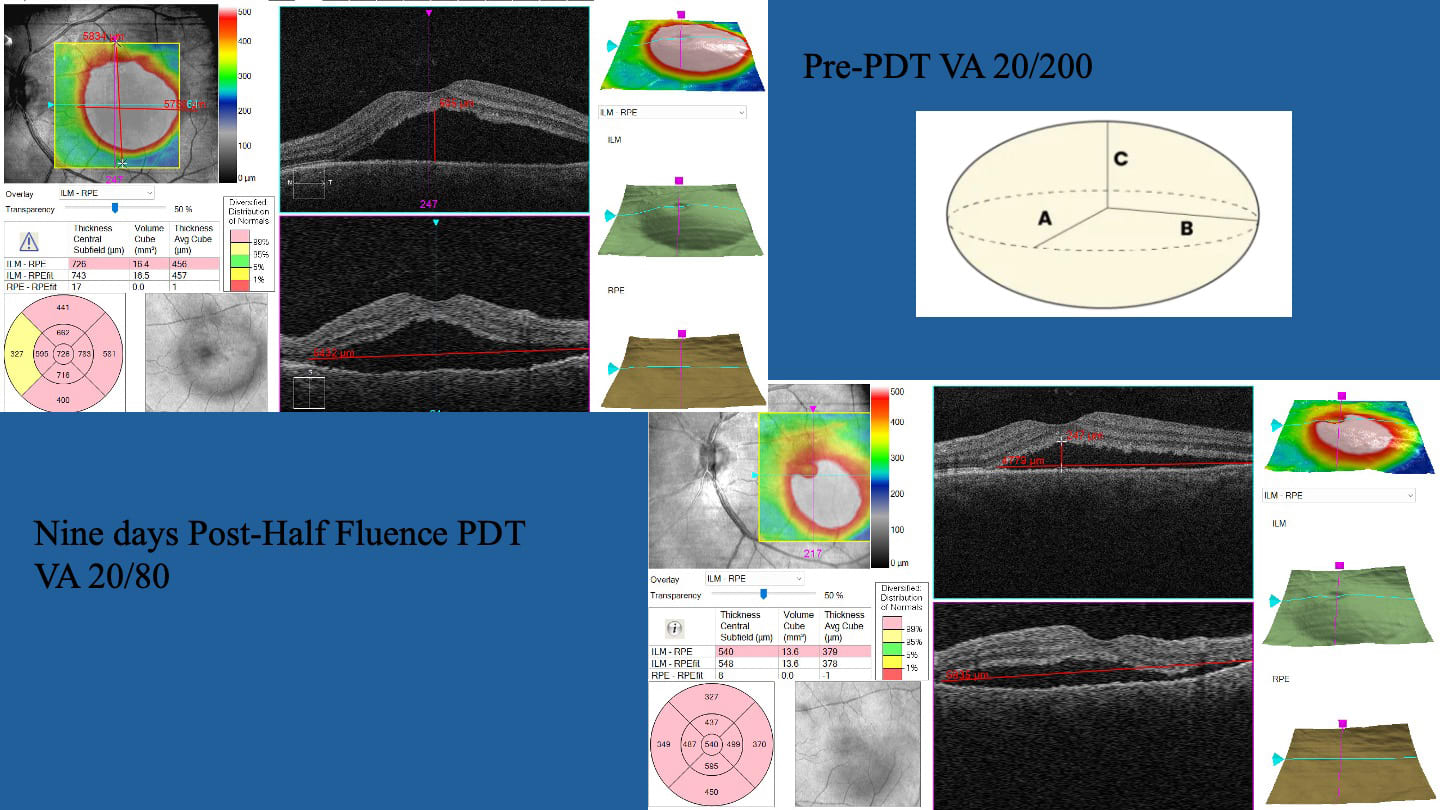
Figure 1. Optical coherence tomography images before and 9 days after half-fluence photodynamic therapy demonstrate a substantial reduction in subretinal fluid in a patient with chronic central serous chorioretinopathy. Visual acuity improved from 20/200 before treatment to 20/80 at day 9.
Previous studies have established the efficacy of reduced-dose and reduced-fluence PDT for CSCR, but have provided less information about the short-term kinetics of fluid resolution. Dr. Colucciello noted that the PLACE and SPECTRA trials reported SRF resolution rates of 50% to 78% within 3 months in chronic CSCR. “We don’t have any more granular data than that,” he said.
The case involved a 58-year-old man with a 3-month history of decreased vision in his left eye. Visual acuity was 20/200, and OCT showed pachychoroid with abundant SRF. Fluorescein angiography showed a focal retinal pigment epithelium leak in the superior macular region.
The patient received half-fluence PDT using verteporfin, with irradiance of 300 mW/cm² and fluence of 25 J/cm². The configuration of the SRF allowed Dr. Colucciello to approximate its volume as a half ellipsoid. Estimated SRF volume decreased from 8.929 mm³ before PDT to 3.606 mm³ at day 9, when visual acuity had improved to 20/80 (Figure 1). Assuming zero-order kinetics, that change represented SRF resolution of approximately 0.5961 mm³, or 6.6%, per day, he said (Figure 2). Extrapolating that rate produced an estimated total clearance time of 15.2 days. The SRF was documented as completely resolved by day 44.
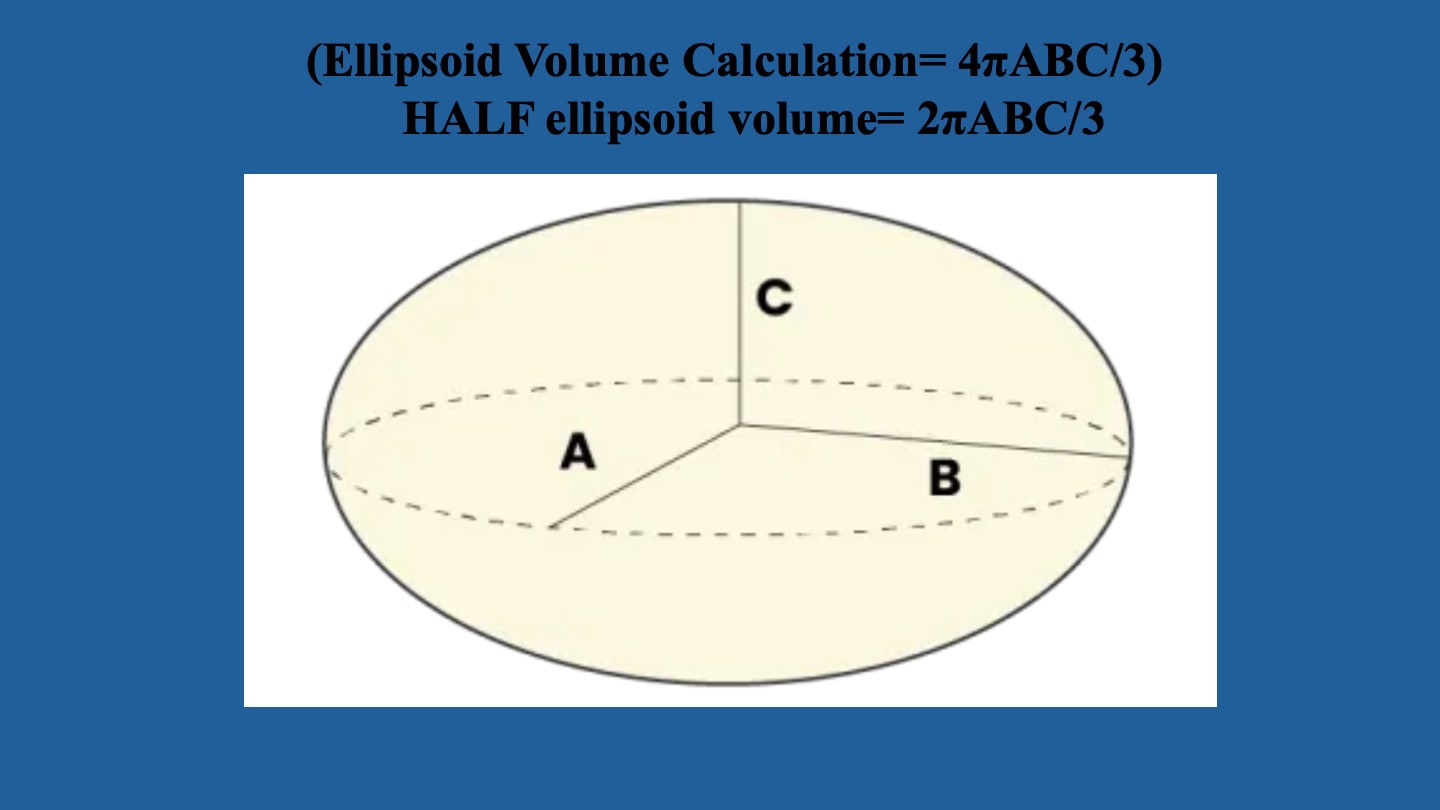
Figure 2. Using a half-ellipsoid model, estimated subretinal fluid volume decreased from 8.929 mm³ before PDT to 3.606 mm³ 9 days after treatment, corresponding to an estimated resolution rate of 0.5961 mm³, or 6.6%, per day.
“This is a single case, and we can't assume that zero-order kinetics will always apply,” Dr. Colucciello cautioned. RPE pump function, choriocapillaris permeability, choroidal hydrostatic pressure, and SRF viscosity could affect the rate of resolution.
Still, he said the case may provide a reference point when discussing the early response to PDT. “This at least gives us an idea, perhaps we can answer these patients, that complete disappearance of subretinal fluid can occur in approximately 2 weeks if indeed they do respond.”
Dr. Colucciello suggested that prospective studies using standardized 3-dimensional OCT segmentation and multiple measurement points should be conducted to better characterize SRF clearance kinetics. RP