



Real-world use of avacincaptad pegol (Izervay; Astellas Pharma) followed similar treatment patterns in eyes receiving concomitant anti-VEGF therapy and those not receiving anti-VEGF, according to an analysis of IRIS Registry data presented at the 59th annual meeting of the Retina Society in Los Angeles.
Seenu M. Hariprasad, MD, of the University of Chicago, presented the findings on behalf of the study authors. The cohort included 10,181 patients, representing 13,391 eyes, who were aged 50 years or older (66% were over age 80), had geographic atrophy, and received their first avacincaptad pegol injection between September 1, 2023, and August 31, 2024. Mean follow-up was about 25 weeks. At baseline, 34.3% of patients had neovascular age-related macular degeneration (nAMD) and 28.2% had choroidal neovascularization (CNV).
Overall, 3,045 eyes (22.7%) received concomitant anti-VEGF therapy during follow-up. Of these, 78.5% received anti-VEGF in the same eye as avacincaptad pegol on the same day or within the prior 60 days. Before avacincaptad pegol treatment, 28.3% of eyes had already received anti-VEGF; 71.8% of those continued anti-VEGF during follow-up. Among eyes without prior anti-VEGF use, 3.4% subsequently received anti-VEGF.
Avacincaptad pegol treatment patterns were similar between groups (Figure 1). Eyes receiving concomitant anti-VEGF averaged 3.9 avacincaptad pegol injections, compared with 3.6 injections among eyes not receiving anti-VEGF. Mean intervals between avacincaptad pegol injections were 7.2 weeks and 6.9 weeks, respectively.
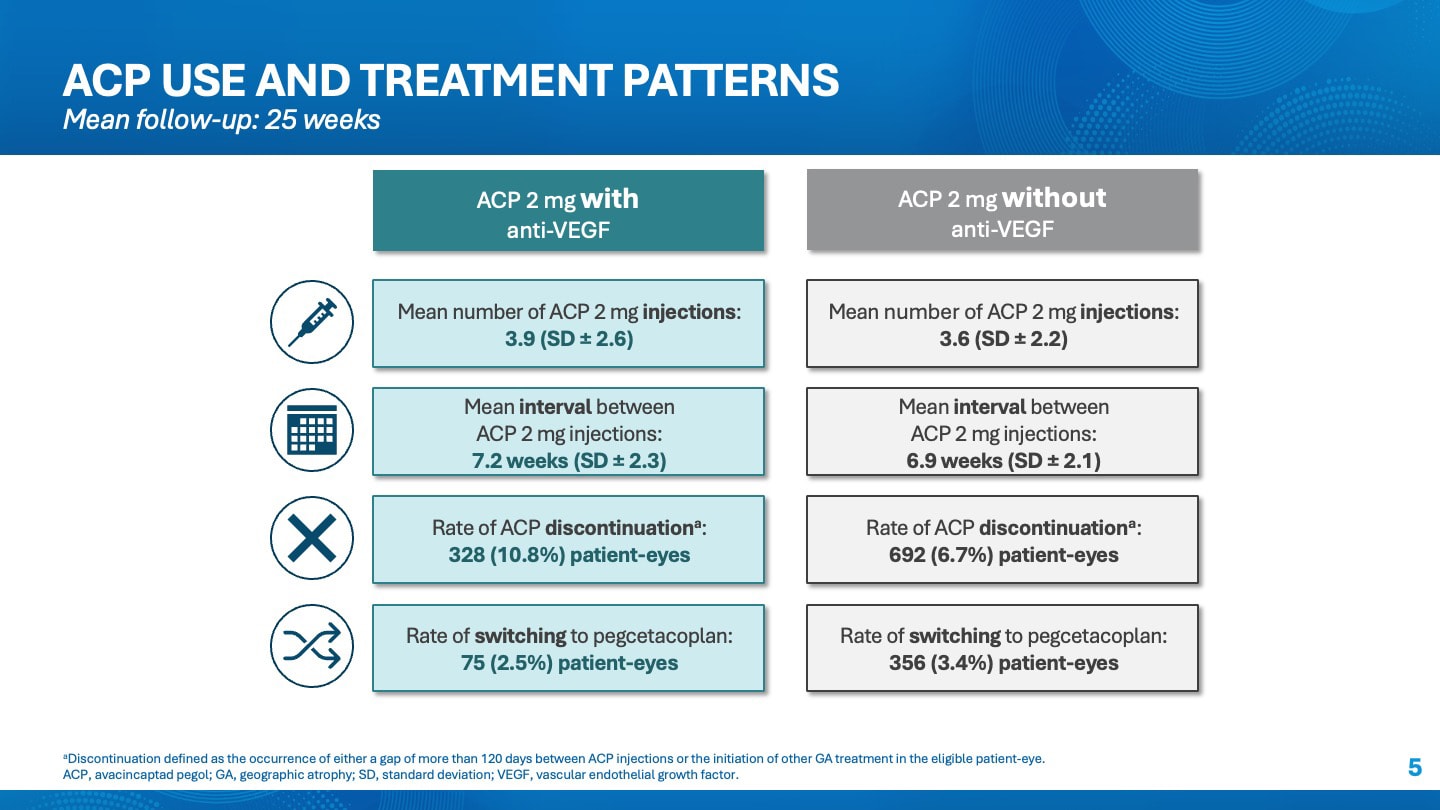
Figure 1. Over approximately 25 weeks of follow-up, avacincaptad pegol treatment frequency and injection intervals were similar in eyes with and without concomitant anti-VEGF therapy. Discontinuation was slightly more common with concomitant anti-VEGF use, and switching to pegcetacoplan was uncommon in both groups.
“The average number of injections was greater than 3, and the interval time between injections was approximately 7 weeks,” Dr. Hariprasad said, noting that this was close to the every-other-month regimen used in year 2 of the GATHER2 clinical trial.
Avacincaptad pegol discontinuation occurred in 10.8% of eyes receiving concomitant anti-VEGF and 6.7% of eyes not receiving anti-VEGF. Switching to pegcetacoplan (Syfovre; Apellis/Biogen) was uncommon, occurring in 2.5% and 3.4% of eyes, respectively.
Treatment-emergent adverse events were reported in 3.8% of eyes receiving concomitant anti-VEGF and 2.6% of those without it. Among eyes receiving concomitant anti-VEGF, CNV and nAMD were the most common key adverse events, occurring in 1.46% and 1.3% of eyes, respectively. Severe vision loss from a key adverse event occurred in 0.07% to 0.18% of eyes.
“Concomitant anti-VEGF therapy did not meaningfully affect avacincaptad pegol treatment patterns and was associated with an expected safety profile in this real-world IRIS Registry cohort,” Dr. Hariprasad concluded (Figure 2).
The study was funded by Astellas Pharma. RP
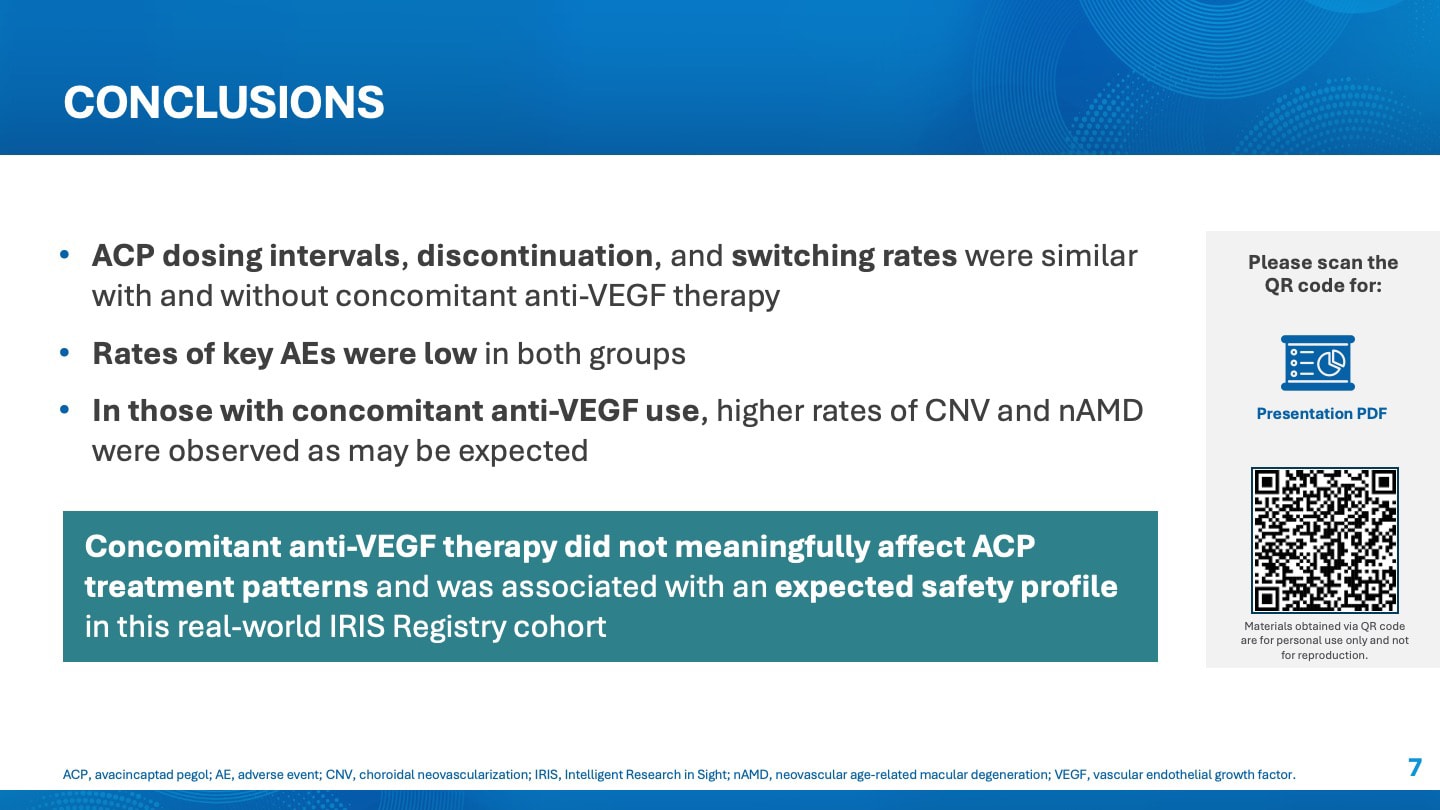
Figure 2. Study investigators concluded thatconcomitant anti-VEGF therapy did not meaningfully alter avacincaptad pegol treatment patterns in this real-world IRIS Registry cohort. Key adverse events were infrequent in both groups, with higher rates of CNV and nAMD among eyes receiving anti-VEGF.