


Last year, I made a difficult but easy decision. I had been a partner in a large and established retina-only private practice that sold to private equity and, more recently, to a corporation—specifically, a drug distributor. Leaving the insulated lifestyle of partnership was admittedly difficult. But prioritizing a patient-centric and physician-centric approach to care in a practice I could call my own was not.
It has been just over a year since I opened my doors, and I have learned that starting an independent retina practice can be overwhelming, but it is not necessarily difficult. There is a steep learning curve, plenty of uncertainty, and a lot of behind-the-scenes work. But these challenges are largely predictable and surmountable. For me, the more unexpected challenges have centered on leadership, culture, and building a practice for the future, providing lessons and opportunities for both professional and personal growth.
The Initial Learning Curve
The transition was fast and overwhelming. From the time I signed my lease and gave official notice to my previous practice, it was only a few months until the day I opened my doors. I think 6 months or more would have been a much more comfortable timeline. The first few months were a whirlwind with a lot to do and learn.
I like to compare those first few months to having your first child. At least for me, early fatherhood was both amazing and miserable. It is incredible to witness the miracle of a new life, but it can be difficult to appreciate the experience in the moment. A new parent often does not sleep enough, constantly worries about whether everything is being done correctly, and obsesses over details that probably do not matter. What kind of bottles are we using? What food should the baby eat? Are we doing this right? The first few months of my practice felt remarkably similar. Unrewarding tasks, constant second-guessing whether I was doing things correctly, and obsessive attention to unimportant details characterized my beginning.
For those without children, another analogy comes to mind: the beginning of ophthalmology residency. Those first months are overwhelming. You are learning a new vocabulary and skill set, a new hospital system, and, in many ways, a new way of life. One recollection that sticks with me is anxiously wondering whether I would ever learn to applanate. For some reason, in my first few weeks of residency, I simply could not figure it out. Then, all of a sudden, it clicked. The same thing happens with indirect ophthalmoscopy, slit-lamp biomicroscopy, suturing with 10-0 nylon, and countless other skills. The list of such struggles early in training is long, but they are quickly forgotten as these challenges become second nature.
Starting a practice has a similarly steep learning curve. There is a tremendous amount to learn and accomplish, and absorbing and managing all of it simultaneously is challenging. But we all get through residency, and I would argue that any retina specialist who has successfully completed rigorous medical training is more than capable of learning how to start a practice.
For me, nearly 15 years after fellowship, the clinical practice of medicine has been the easy part of starting an independent practice. For someone earlier in their career, however, reserving meaningful bandwidth to develop competence and confidence as a clinician and surgeon must remain a priority.

Learning the Business of Practice
Beyond developing clinical skills, much of what makes starting a practice overwhelming is onboarding multiple new systems simultaneously. Establishing the business, obtaining licenses and privileges, completing insurance credentialing, choosing an electronic medical record and practice management system, selecting equipment, and training on these systems all require time, thought, and vendor discussions. Each individual decision is significant; taken together, they are … well, very significant.
But there is a predictable learning curve. Initially, we are all generally incompetent at using a new system. Eventually, with repetition, we become proficient. The process is similar to learning any new skill.
Some physicians may choose to outsource certain functions, such as coding and billing. In my case, I decided to learn and do as much as possible myself initially. My thinking was that understanding these processes firsthand would allow me to provide more direct oversight when I eventually delegate them to an outside vendor or, more likely, bring additional support in house.
I think that initial time investment will be worth it. But doing more comes at a cost. Learning each system takes time. Learning all of them at once can be overwhelming. We all need to choose how much to take on and prioritize things we consider most important. Starting an independent practice certainly requires many hours training, learning, and relearning. But it is manageable.
Matching Resources to Growth
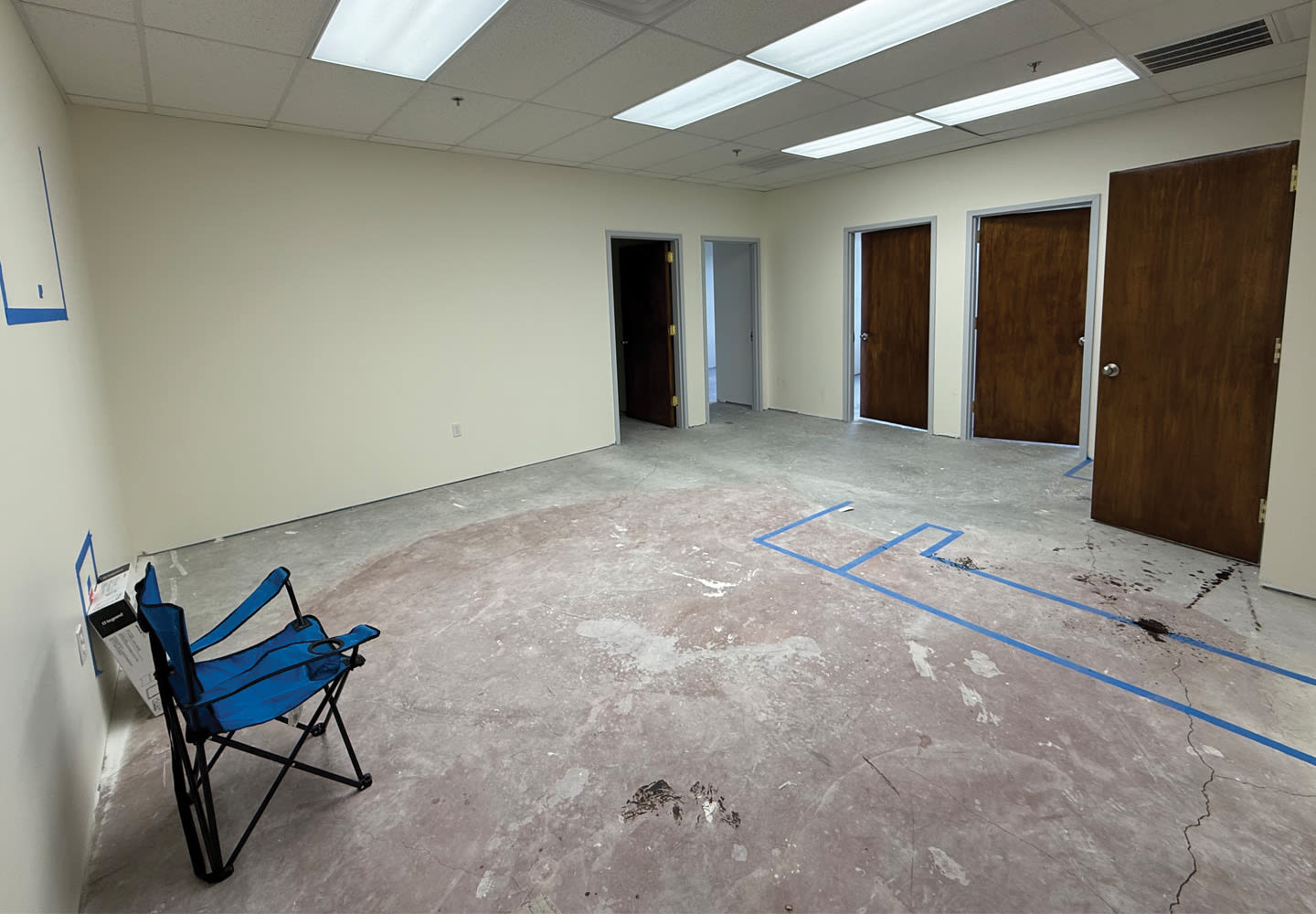
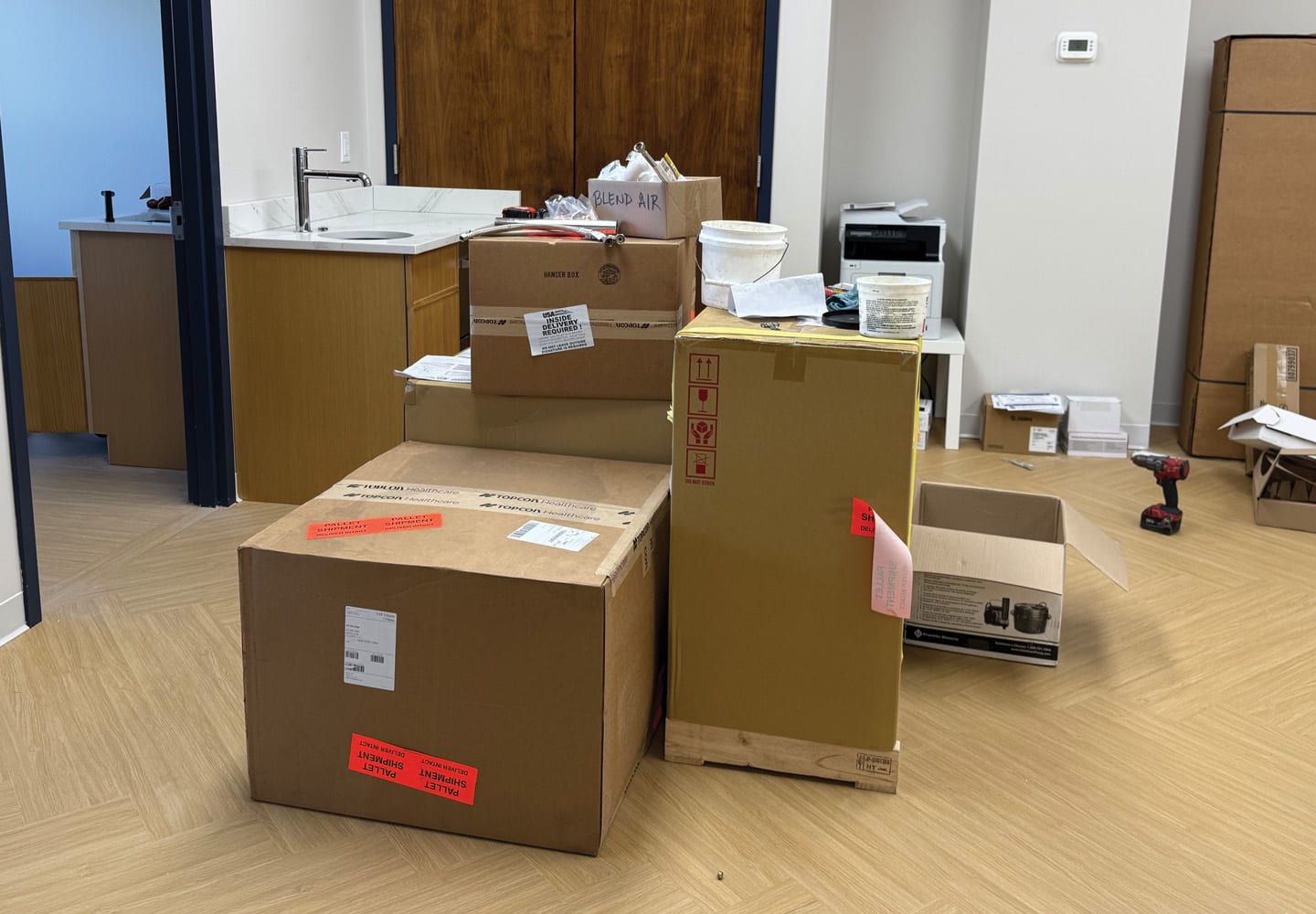
Cash flow is particularly important during the first year. When I initially started looking for office space, my plan was to build a flagship, dream office—one that I would fully staff and equip with all the bells and whistles. Available office options in my target geography were limited, however, and I ultimately pivoted, largely out of necessity, to a smaller office. I decided to limit renovations to save both time and money. In retrospect, I strongly believe that was a wise decision. The office turned out great. It is amazing how far new paint and new floors will go (Figure 1).
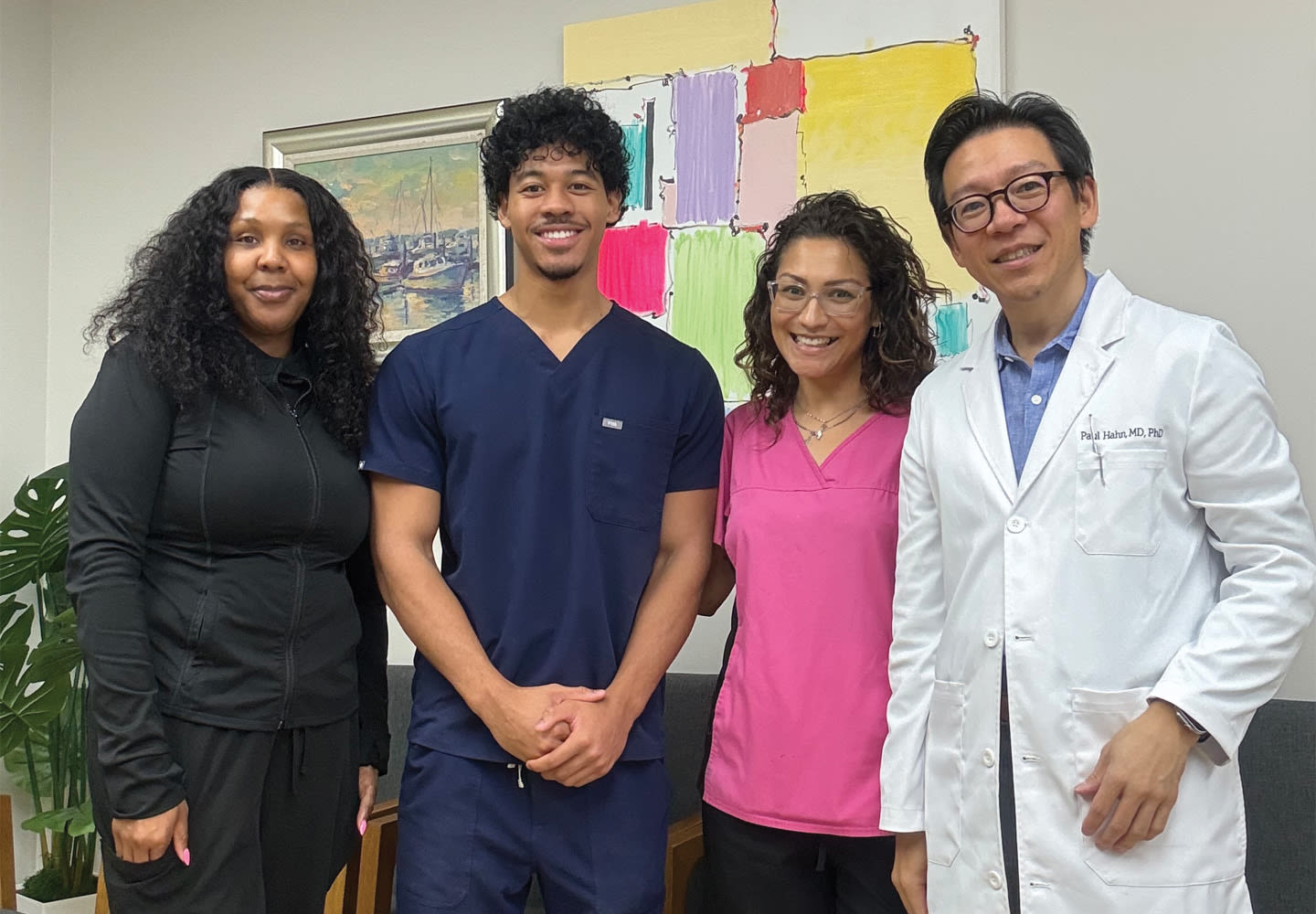
Staffing is the largest expense, so I kept my initial staff small. I started with 1 employee—an office manager—and have tried to stay slightly ahead of the practice’s needs by adding staff as I anticipate demand. My goal has been to ensure that the patient experience remains strong without building an unnecessarily large infrastructure before the practice requires it. Currently, I have the equivalent of 3.5 full-time employees, including 1 remote employee (Figure 2).
For physicians recently out of training who are starting an independent practice, I would strongly favor a lean approach. For more established physicians, the calculus may be different. In my situation, I was starting in a new referral zone outside my noncompete radius. In many ways, that meant building a practice from scratch. Although I am confident that the practice will grow to achieve my targets, the pace of growth in a saturated market can be unpredictable. A lean model therefore made sense for me.
If someone were not bound by an enforceable restrictive covenant and could establish an office within the region of their existing practice, patient population, and referral base, it might make more sense to build a flagship location from the beginning. Personally, it took a little ego swallowing for me to return to such a lean practice. But from a business-development perspective, I believe it was the right decision for me.
Finding Support From Colleagues
A concern often raised about solo practice is that it can be isolating. In my experience, that has not been the case. There is a strong network of solo and independent retina specialists—and eye physicians more broadly—that is remarkably collegial and supportive. Many share a belief that independent medical practice remains important, especially in the current health care environment. Having been in practice for some time, I am fortunate to already have an existing community of colleagues. But it has been refreshing to engage with a new group of physicians who are resourceful, insightful, and innovative. They have created their own models of success, providing a framework for others seeking an independent practice path.
There are many people in the broader retina community who discourage starting an independent practice because of the challenges. Although I have great respect for many of the individuals, including my mentors, who have voiced these concerns over the years, I do not know of a retina specialist who has actually started an independent practice who has cited these real—but ultimately surmountable—challenges as a reason not to do it.
Lessons in Leadership
The second half of my first year in independent practice has been significantly better than the first half. I am still nowhere near as busy as I was in my previous practice. But the new practice has developed a rhythm to patient care and, importantly, a sense of growth. Many of the daily startup headaches have been resolved. There are still daily struggles, but I can now focus on more enjoyable aspects of building a practice: developing a vision, fostering a practice culture, understanding referral patterns, and optimizing operations rather than simply figuring out how to stay afloat.
However, as the initial demands of the startup phase begin to ease, I have started to recognize my biggest ongoing challenge, which is something I did not fully anticipate: how to manage people as the sole practice owner and leader. I have previously worked in both academic and group private practice, with leadership roles as a faculty member and partner. But being the person ultimately responsible for a fledgling practice that you created is fundamentally different.
I am fortunate to have found really great staff. Yet I constantly find myself falling into a dangerous zone of unreasonable expectations. Intellectually, I understand that the success of my practice, like any business, depends on its people and culture. What I have learned is that it can be surprisingly difficult to be the person responsible for actively shaping that culture.
When you are deeply invested in the success of something you have created, it is easy to develop a myopic perspective. I have learned the importance of stepping back and creating some distance so that I can see the practice more objectively.
One of my solo-practice colleagues gave me advice that I have found particularly useful: Do not make every problem a 10-out-of-10 problem. It is simple advice, but it can be difficult to follow. As with most things in life, you have to pick your battles. You have to focus on the positive rather than constantly dwelling on what is wrong. And you have to recognize that building a healthy practice is a long-term process, not a daily referendum on whether you are succeeding. The first step in growth is recognizing the challenge. The lifelong journey, which I am just beginning, will be learning how to become an effective leader.
Looking Ahead
During the recent ASRS annual meeting, a small group of mostly solo retina specialists gathered in Montreal. Everyone there seemed to feel that starting an independent practice was the best decision they had ever made. I had heard that sentiment before. Although I could see myself agreeing with it someday, I could not honestly say that I felt that way after only 1 year. So I asked the group: At what point did you start feeling that way? The consensus was that it took a couple of years. That resonated with me.
One year in, I am happy with my decision. I am still very much in the elbow-grease phase, and I would be hard-pressed to honestly call this the best decision of my life. But I can see it getting there.
I am building a practice for my future. And there is something larger at stake. We should all be increasingly concerned about the direction our field is heading as corporate aggregation of medical practices continues. I hope that those of us creating independent practices are doing more than simply building businesses for ourselves. I hope we are helping preserve a viable model for independent medical practice in retina and beyond. RP